
How to Make a Bed Look Expensive—Without Filling It With Cushions
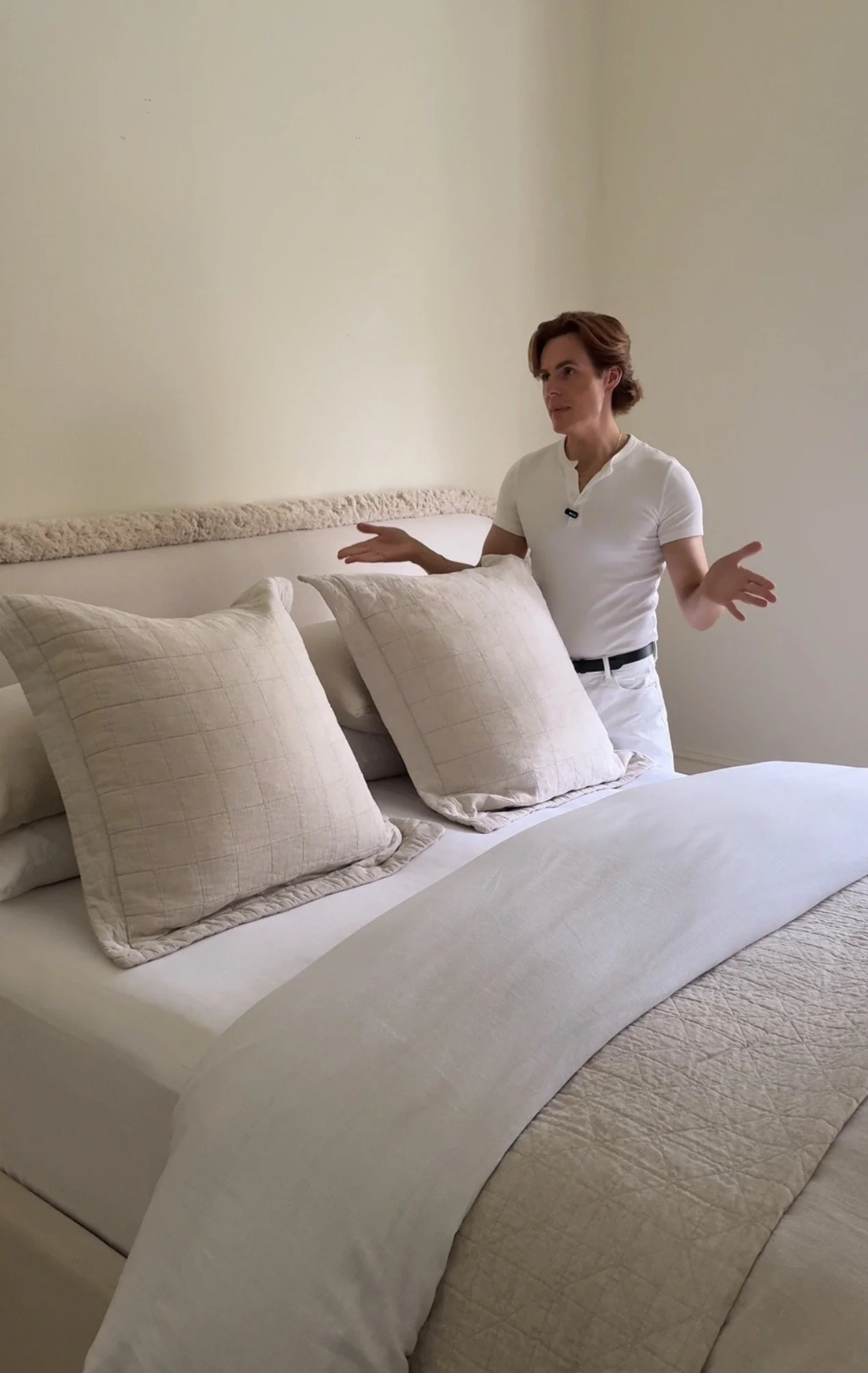
An expensive-looking bed is not necessarily an expensive bed.
It is usually a bed with the right proportions, good foundations and a few considered layers. It looks generous without being crowded, comfortable without appearing collapsed, and styled without requiring you to remove 14 cushions before getting into it.
You can buy beautiful bedlinen and still end up with a disappointing bed if the duvet is too small, the pillows are flat or everything finishes at exactly the same point. Equally, relatively simple linen can look very good when the scale and structure are right.
Here is how I approach it.
Start with the bed itself
Before we discuss linen, look at the frame, base and bedhead.
A bedhead gives the bed a visual anchor and makes the room feel finished. It should be wider than the mattress—or at least properly aligned with it—and tall enough to remain visible once the pillows are in place. A tiny bedhead disappearing behind a wall of cushions is not contributing much.
If you have an ensemble base, a valance or tailored bed skirt can soften it and conceal the practical parts of the bed. If you have a beautiful timber or upholstered frame, let it be seen. The point is to make the foundation feel intentional rather than disguised by an avalanche of linen.
Use a larger duvet
This is the change that makes the most immediate difference.
On a queen bed, I generally use a king duvet. The additional width gives you a fuller drop on both sides and creates the generous, properly dressed look associated with good hotels and beautiful bedrooms.
A duvet that only just covers the mattress can make even expensive linen look skimpy. Going up a size gives the bed visual weight and helps conceal the mattress and base.
For a plush appearance, I prefer a duvet around 650–700 GSM in cooler weather. In summer, use a lighter fill rather than sacrificing the correct size. Fullness is lovely; waking up overheated is not.
Choose bedlinen that works together
Your sheets and duvet cover do not have to form a matching set.
In fact, a bed often looks more interesting when the pieces are coordinated rather than identical. You might combine a crisp white sheet with an oatmeal duvet, a fine stripe with a solid colour, or several related shades within one restrained palette.
The key is repetition. If you introduce a colour or material once, find a subtle way to reference it elsewhere. This could be through the sheet cuff, pillowcases, bedhead, valance or coverlet.
Natural fibres also help. Cotton, linen and cotton–cashmere blends tend to sit and crease in a way that feels relaxed and tactile. The goal is not to eliminate every crease. It is to make the bed look cared for.
Use a top sheet
I know the top sheet inspires a surprising amount of public debate. I use one.
Apart from being practical, it creates another visible layer. Fold the duvet back near the top of the bed so the sheet cuff is exposed. This breaks up a large expanse of duvet cover and gives the bed a more complete, hotel-like finish.
Make sure the folded edge is even. It need not be measured with surveying equipment, but it should look deliberate.
Stack the sleeping pillows
I prefer sleeping pillows stacked flat rather than standing vertically.
Stacking creates a relaxed, tailored foundation and allows the bedhead to remain visible. On a queen bed, two stacks of two standard pillows usually provide enough height and structure. On a king bed, use king pillows so the scale suits the width of the mattress.
Your pillow inserts matter. Flat, underfilled pillows make the entire bed look tired. Replace inserts that no longer hold their shape, and use protectors to keep them in good condition.
Add Euro pillows with restraint
Two Euro pillows are generally enough.
They add height, softness and another opportunity for texture without turning the bed into a cushion showroom. Place them against the bedhead or behind the stacked sleeping pillows, depending on the shape and height of your bedhead.
The Euro covers can match the duvet, introduce a quilted texture or pick up another tone from the room. They should support the overall composition, not become the main event.
Finish with one decorative cushion
If the bed needs a final layer, I usually choose one long lumbar cushion.
The rectangular shape works across the width of the bed and feels more resolved than several small cushions dotted across it. It also means there is only one thing to move at bedtime.
Choose a fabric with enough contrast to be visible but not so much that it looks unrelated to everything else. A small-scale stripe, velvet, woven texture or tonal pattern can work beautifully.
Layer a coverlet beneath the duvet fold
A coverlet gives the bed depth and makes the lower half feel finished.
Place it over the bed beneath the duvet, then fold the upper section of the duvet and top sheet back together. This allows the texture or quilting of the coverlet to appear without adding a random strip of fabric across the foot of the bed.
I prefer this to tossing a throw diagonally over one corner. The coverlet has a function, follows the architecture of the bed and contributes to the overall structure.
Pay attention to the drop
Stand back and look at both sides and the foot of the bed.
The duvet should fall evenly, the mattress should not be awkwardly exposed and the folds should feel balanced. These are small adjustments, but they are what make a bed look properly dressed.
This is also why size matters more than simply purchasing a fashionable colour. A beautifully coloured duvet that barely reaches the sides of the mattress will never look as generous as one with the correct scale.
Keep the palette considered
You do not need an entirely neutral bedroom to make it feel expensive. Colour can be chic, but it needs a relationship to the rest of the room.
Pull tones from the curtains, rug, artwork or upholstery. If the room already contains several strong colours, allow the bed to provide some calm. If the architecture and furnishings are quiet, the bed can carry more colour or pattern.
Expensive-looking rooms rarely feel as though every item was selected separately. They feel connected.
Make the bed properly
There is no styling trick that replaces making the bed.
Smooth the fitted sheet, straighten the top sheet, distribute the duvet filling into the corners and give the pillows their shape. You are not aiming for a bed that looks untouched; you are removing the visual signs of neglect.
The result should still feel inviting. I like a bed to look as though somebody could climb into it, not as though it has been shrink-wrapped for inspection.
The formula
For a queen bed, my usual formula is:
A king-size duvet
A fitted sheet and top sheet
Four stacked standard sleeping pillows
Two Euro pillows
One long lumbar cushion
One coverlet layered beneath the duvet fold
That is enough.
The expensive feeling comes from fullness, proportion, texture and repetition,not from adding more things. Get the scale right, choose materials that feel good and give every layer a reason to be there.
Listen next
For more on linen, layering, proportions and bedhead decisions, listen to All There Is to Know About Beds: https://open.spotify.com/episode/1KNf5qVNjQyx8YBV8Pj7Y6
Shop my current recommendations
For the home, hosting and bed pieces I am currently using and recommending, visit my ShopMy: https://shopmy.us/louiburke
You can also browse my Amazon Australia storefront: https://www.amazon.com.au/shop/louiburke
These storefronts are updated regularly, so the recommendations stay current without turning this article into an outdated product catalogue.