
Table-Setting Etiquette: The Rules That Actually Matter
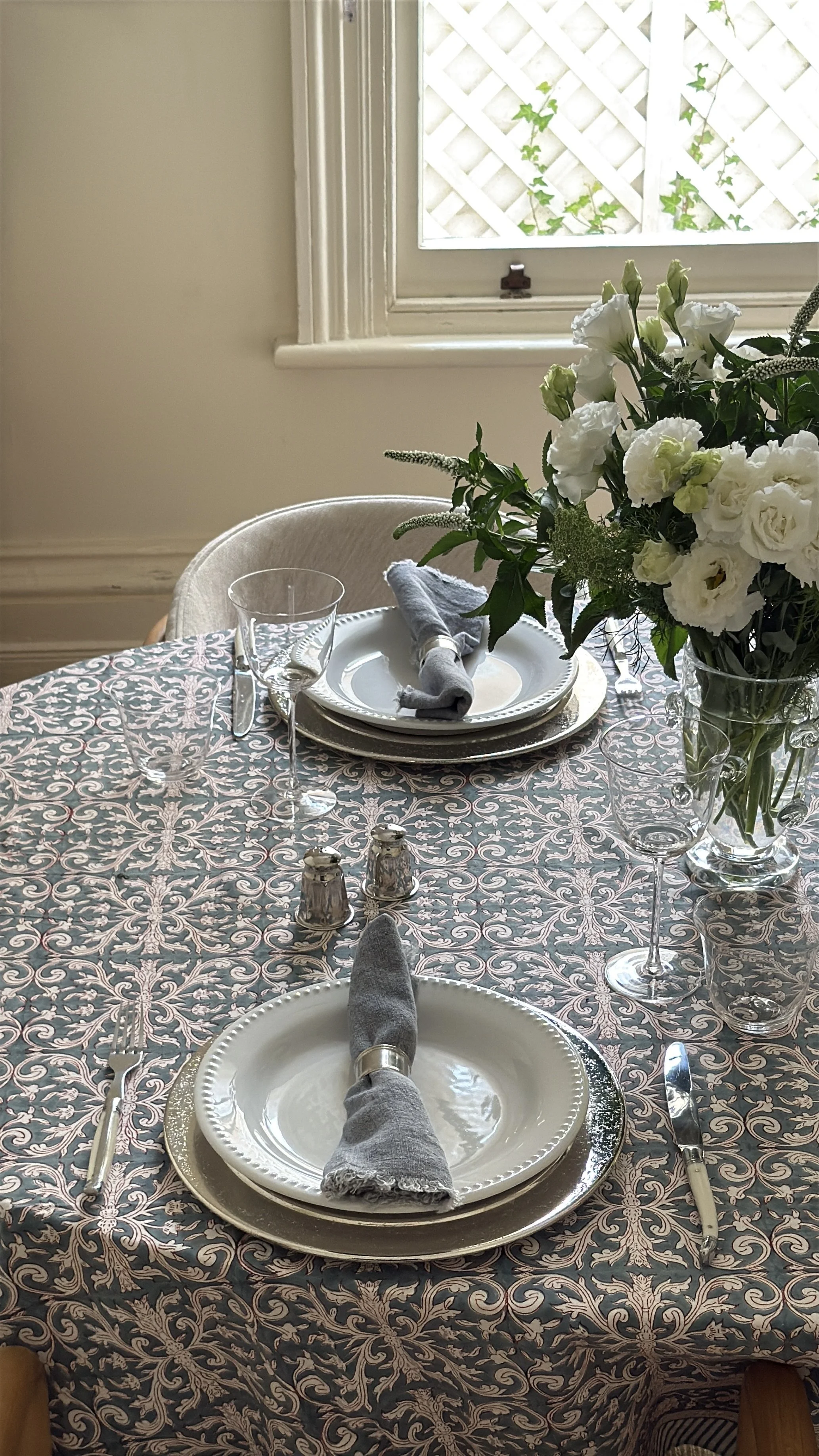
Every time I set a table online, a small but highly motivated committee arrives to inform me that a fork, glass or napkin is several centimetres away from where it apparently lives by law.
Formal table-setting conventions do exist. They are useful because they give guests a familiar visual language: what will be used, in which order and where to find it. But formality is a scale, and personal preference is not necessarily a correction.
The point of etiquette is to make people feel comfortable. If your table is technically perfect but everyone is frightened to touch it, we have rather missed the point.
Here are the conventions worth understanding, and the areas where you can safely calm down and enjoy yourself.
Set the table for the meal you are serving
Do not add cutlery, plates or glassware simply because you own them.
Each piece should have a purpose. If there is no soup, you do not need a soup spoon. If you are serving one wine, you do not need to create a glassware forest. A well-set table gives guests what they require without making them decode the setting.
Start with the menu, then build the place setting around it.
Forks go on the left; knives and spoons go on the right
This is the basic convention and the one most people recognise.
Knife blades face inward toward the plate. Cutlery is generally arranged in the order it will be used, working from the outside toward the plate. Dessert cutlery can be placed above the plate or brought out with dessert.
At a relaxed lunch or dinner, you may only require one fork and one knife. There is no prize for adding more.
Keep the place setting visually aligned
The bottom edges of the cutlery should roughly align with the lower edge of the plate. Again, roughly. Nobody needs to get the ruler out.
Consistent spacing makes the entire table look calm, even when you are mixing plates, colours or patterns. It is the repetition across the table—not microscopic precision at one setting, that creates order.
The napkin can go in more than one place
The napkin may sit to the left of the fork, beneath the fork, on the plate or, in some settings, inside a glass.
I often place it to the left of the fork because I like the place setting to read from left to right: napkin, fork, plate, knife, water glass and wine glass. It creates a neat rhythm and keeps the fork sitting directly on the table.
Placing the fork on top of the napkin is also correct. It is simply not the only correct option.
Choose the position that suits the available space, the napkin fold and the overall design of the table. As long as it is easy for the guest to find and use, civilisation will continue.
Place glasses above the knives
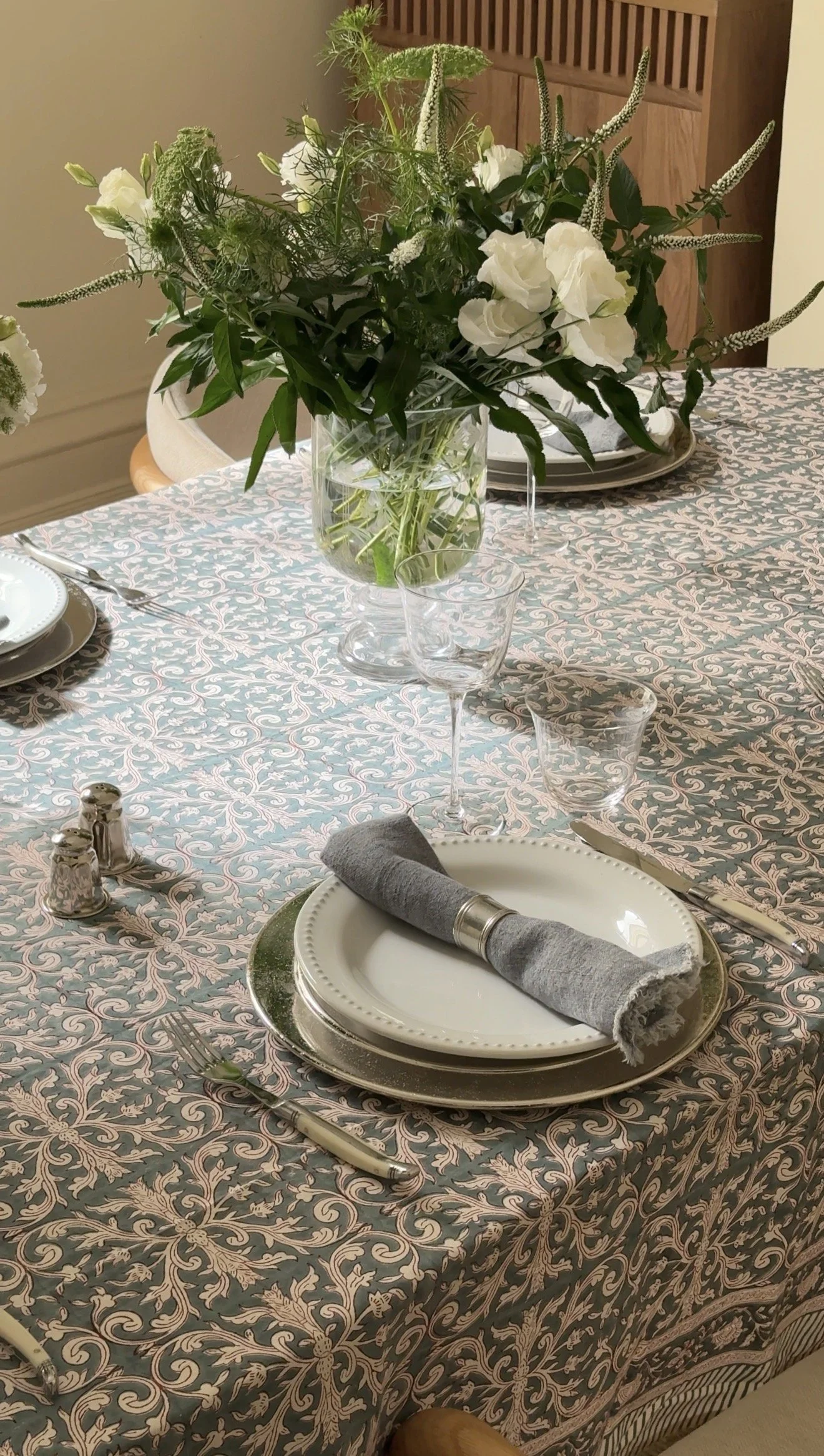
The water glass usually sits above the knife, with the wine glass positioned slightly to its right. If you are serving more than one wine, additional glasses can follow in the order they will be used.
For a casual setting, keep it simple. One water glass and one wine glass are often all you need.
Make sure guests can reach their glasses without navigating around a lamp, vase or decorative object. A table can be layered and still remain functional.
Give every guest enough room
A place setting needs breathing space.
Avoid positioning chairs so closely that guests are knocking elbows or constantly moving glassware to make room. If the table is small, remove unnecessary pieces rather than shrinking each setting into an impossibly tight grid.
The table should accommodate the people first and the styling second.
Keep flowers low, or raise them properly
Table flowers should allow guests to see one another.
As a practical guide, keep arrangements below approximately 30 centimetres so people can see over them, or lift them above approximately 60 centimetres so sightlines pass underneath. The awkward zone in between is where guests spend dinner leaning around foliage.
Low bowls, bud vases and several small arrangements work well because they can travel along the table without forming a visual wall.
Be conscious of fragrance too. Heavily scented flowers can compete with food and wine.
Use table lamps thoughtfully
Cordless table lamps can create beautiful pools of light and make dinner feel intimate. They are decorative, but they also have a job to do.
Keep them low enough that guests can see over them and position them between place settings rather than directly in front of somebody’s face. Use a warm light level; the table should glow, not resemble an office desk.
Candles remain lovely, of course. Just avoid highly scented varieties at the dining table and make sure sleeves, flowers and menus are clear of the flame.
A tablecloth is not compulsory
A white tablecloth is classic, but it is not the universal answer to every dining table.
Pattern can bring a simple setting to life. A coloured or neutral cloth can connect the table to the room. A beautiful timber, stone or glass surface may be worth leaving uncovered.
The level of formality, the material of the table and the mood of the meal should guide the choice. White is chic. It is not compulsory.
If you do use a tablecloth, make sure it is clean and reasonably pressed. There is a considerable difference between relaxed linen and a cloth that has retained the exact geometry of the cupboard.
Chargers and side plates are optional
A charger can add colour, texture and scale beneath a dinner plate, particularly for a more formal meal. It can also overcrowd a smaller table.
Side plates are useful when you are serving bread, but they do not need to appear automatically. Traditionally, the bread plate sits above the forks on the left.
Use these pieces when they improve the meal or the composition, not because a diagram told you an empty space must be filled.
Consider how the meal will actually unfold
Before guests arrive, sit at one of the settings.
Can you reach the water? Is the centrepiece blocking the person opposite? Is there room for serving dishes? Does a lamp shade collide with your wine glass? This quick test tells you more than staring at the table from the doorway.
If food will be served family-style, preserve space in the centre or plan a nearby surface for dishes. If plates will arrive already served, you can style the centre more fully.
Etiquette should support hospitality
The most important rule is that guests should know what to do without feeling watched.
Offer them a drink, tell them where to sit, serve the meal at a sensible pace and do not apologise repeatedly for things they had not noticed. A relaxed host gives everyone else permission to relax.
A properly set table is a generous gesture. It shows that you anticipated what people might need and made the meal feel like an occasion. The formal conventions are there to help you achieve that—not to catch the host placing something two centimetres outside an imaginary grid.
Learn the structure, adapt it to the meal and then get on with having people over.